
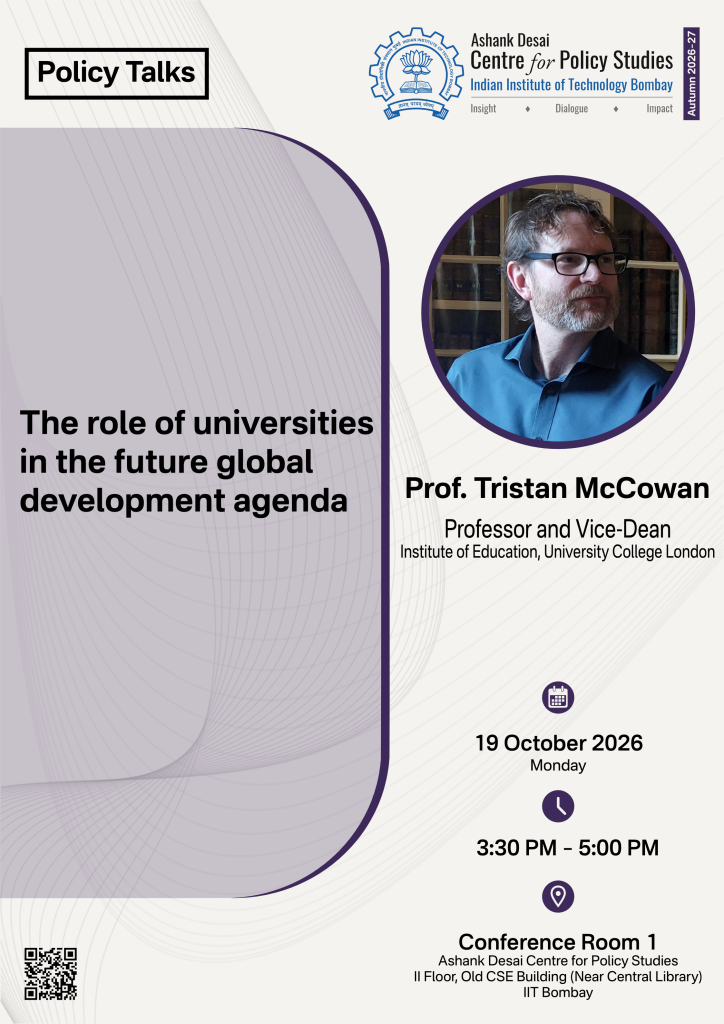
Abstract: In 2030, the current global development agenda will expire, with the world’s nations unlikely to achieve the 17 Sustainable Development Goals proposed 15 years before. The uncertainty over what will replace that agenda is intensifying in the current crisis of multilateralism, continuing conflict and inequalities, the disruptions of AI and ecological collapse. Higher education has had a central role in the achievement of the SDGs, but how will this role express itself in the new global development agenda? What kind of institution will emerge from the polycrisis, and will it fulfil its promise of solving the world’s complex problems and equipping young people for flourishing lives? This presentation will debate the future role of the university, the supposed inevitability of technology-based transformation, the unbundling of the institution into microcredentials and flexible pathways, and the shifting relationships with economy, politics and culture. It argues that a fundamental rethinking of the nature of the university is needed, along with a renewed protagonism of the institution in contributing to just, sustainable and imaginative futures.
Speaker Bio-sketch: Tristan McCowan is Vice-Dean International and Professor of International Education at the Institute of Education, University College London. His work focuses on higher education in the international context, including issues of access, curriculum, alternative models and sustainability. His books include Higher Education for and beyond the Sustainable Development Goals (Palgrave Macmillan, 2019), Education as a Human Right (Bloomsbury, 2013) and Rethinking Citizenship Education (Continuum, 2009). From 2015-2021 he was editor of Compare – a Journal of International and Comparative Education. He was the founder of the Climate-U network, bringing together 30 universities and environmental organisations in 15 countries engaging in climate-related participatory action research.His latest book, Universities and Climate Action, was published by UCL Press in 2025.