Abstract:
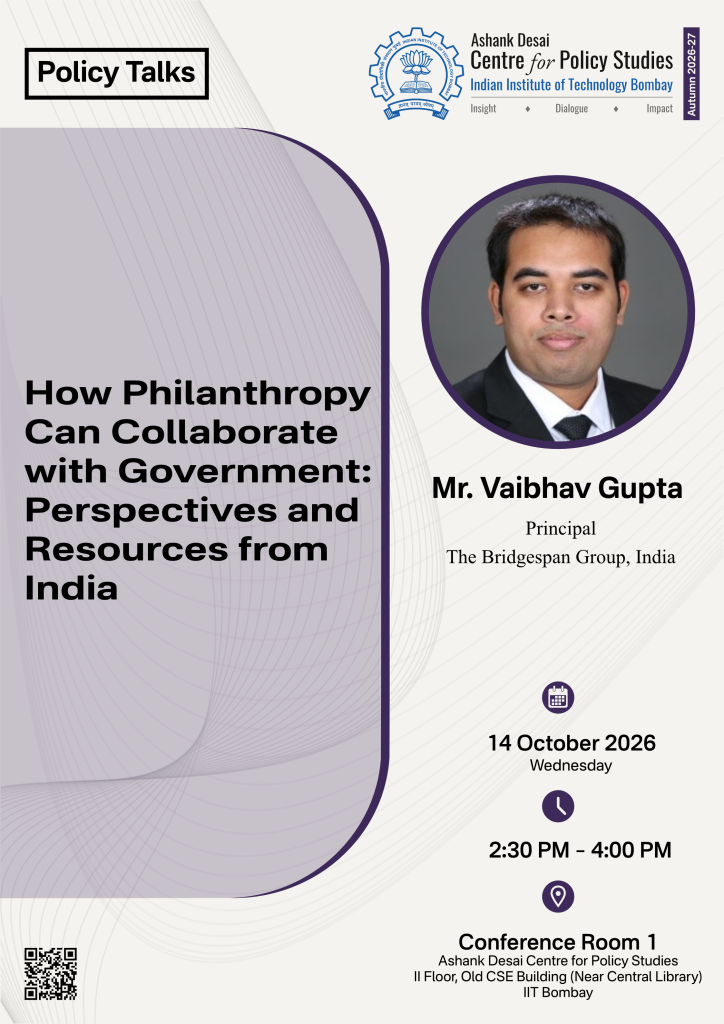
The Bridgespan Group’s July 2026 report examines how philanthropy and government can work together to advance social development in India. Drawing on interviews with more than 50 government and philanthropic leaders, secondary research, and Bridgespan’s experience, it offers practical guidance for starting, managing, and sustaining these partnerships. The report begins from a simple premise: government has the primary responsibility and reach to deliver public programmes, while philanthropy can contribute capabilities that strengthen them. Funders and their nonprofit partners may bring specialised knowledge, the capacity to test ideas, close familiarity with communities, and the ability to connect organisations working on a shared problem. These contributions are most useful when they respond to a government priority and can eventually be adopted by public systems. Bridgespan identifies five common ways to collaborate: providing research and policy advice; helping design programmes, solutions, or platforms; supporting programme management; building the skills of government personnel; and bringing community perspectives into programme design and delivery. The appropriate pathway depends on a funder’s goals, experience, appetite for risk, and capacity to work with government over time. The report also stresses that collaboration rarely follows a straight line. It can take time to build relationships, align departments, and adjust plans as circumstances change. To guide this process, Bridgespan sets out eight practices across four stages. Partners should first clarify the value they can offer and find a suitable fit. They should then design initiatives with government, keeping eventual adoption by public systems in view. During delivery, they should demonstrate early progress, support committed officials, manage the scope of work, and review results together. Finally, they should plan a gradual transition so that useful work can continue within overnment systems. Beyond individual partnerships, the report proposes ways to improve the wider environment for collaboration. These include government partnership cells that help identify and coordinate opportunities, shared records and practical guides that preserve institutional knowledge, more forums for dialogue, and training for leaders on both sides. The report’s central message is that philanthropic funding alone does not create lasting public impact. Effective collaboration depends on trust, a clear public purpose, attention to community experience, and a willingness to adapt. When partners plan for government ownership from the outset, their work has a better chance of continuing beyond a pilot or a funding cycle.
Speaker Bio-sketch: Mr. Vaibhav Gupta is a Principal at The Bridgespan Group’s India office in Mumbai. He has 12 years of experience working with government, nonprofits, CSR organisations, and public policy institutions. Before joining Bridgespan, he worked with the Ministry of Skill Development and Entrepreneurship, Samagra, the Clinton Health Access Initiative, and other social impact organisations. He holds a postgraduate qualification in management from the Indian School of Business and a B.Tech in Engineering Physics from Delhi Technological University. Profile: https://www.bridgespan.org/team-members/vaibhav-gupta